Articles › Systems & Processes
Systems & ProcessesChoosing and Implementing Accounting Software for Your Business
A fractional FD can guide you through selecting and implementing the right accounting software for your SME. Learn what to consider, what to avoid, and how to get it right first time.
Choosing the wrong accounting software is one of the most expensive mistakes a growing UK business can make. The immediate cost is modest — a monthly subscription, a few days of set-up time — but the downstream consequences are significant: inaccurate management information, painful re-keying of data between systems, and the eventual cost of migrating again when the software proves inadequate. A fractional Finance Director helps you avoid this trap entirely by leading the selection and implementation process with a clear strategic view of where your business is heading.
Accounting software selection is not a technical decision — it is a strategic one. The right platform depends on your business model, your growth trajectory, your integration requirements, and the capabilities of your finance team. A part-time FD brings the experience of having implemented finance systems across multiple businesses to bear on your specific situation, shortcutting the learning curve considerably.
Why Accounting Software Selection Goes Wrong
Most accounting software decisions in SMEs are made by the wrong person, using the wrong criteria. The decision is frequently driven by whoever does the bookkeeping, who understandably prioritises familiarity and ease of data entry over strategic capability. Or it defaults to whatever the external accountant recommends — which often reflects their own practice management preferences rather than your business needs.
The result is a business running on software that was fine for a £500k turnover company but is creaking badly at £3m, with workarounds proliferating in spreadsheets, reports that take hours to produce manually, and a finance team spending far too much time on low-value data processing rather than analysis. A fractional FD evaluates accounting software from a senior finance perspective, asking the questions that matter:
- Can this platform support multi-currency transactions as we expand internationally?
- Does it offer departmental or cost centre reporting for the management accounts we need?
- How does it integrate with our CRM, payroll system, and e-commerce platform?
- What does the audit trail look like, and will it withstand scrutiny from an investor or acquirer?
- What is the realistic cost of ownership over three years, including add-ons and integrations?
The FD-Led Selection Process
A structured accounting software selection process, led by a fractional FD, typically unfolds in four stages. Each stage builds on the last and ensures that the final decision is grounded in your actual requirements rather than marketing claims.
Stage One: Requirements Mapping
Before evaluating any platform, the FD works with you to document your requirements comprehensively. This means mapping your current finance processes — how invoices are raised, how expenses are captured, how payroll is processed, how VAT returns are prepared — and identifying where each process breaks down or creates unnecessary manual effort. It also means understanding where you want to be in three years: new markets, new revenue streams, potential investors, possible exit. Your accounting software must serve the business you are building, not just the business you have today.
Requirements are then categorised into must-haves, should-haves, and nice-to-haves. This prevents the common mistake of choosing a platform that excels on impressive but peripheral features whilst falling short on the fundamentals.
Stage Two: Platform Shortlisting and Evaluation
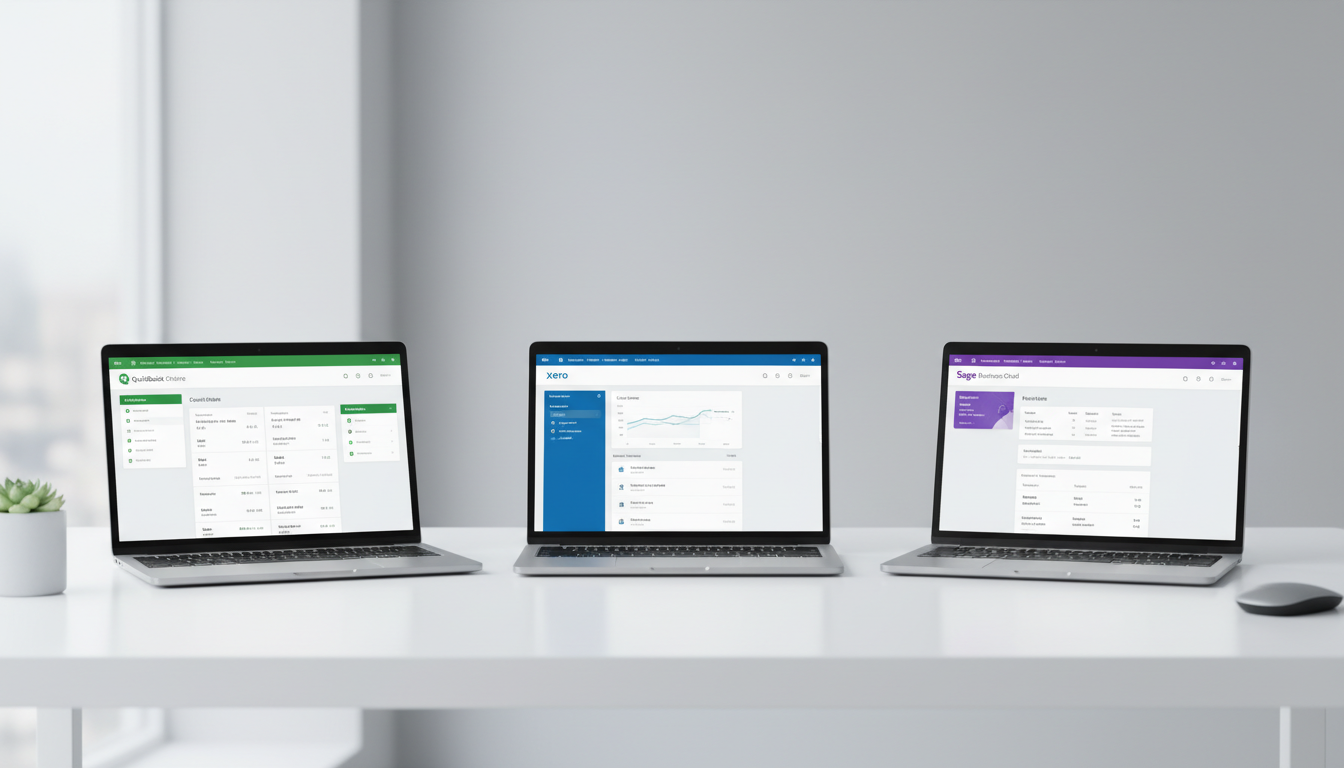
With requirements documented, the FD shortlists two or three platforms that are credible candidates for your situation. For most UK SMEs, this means evaluating the leading cloud accounting platforms — Xero, QuickBooks Online, and Sage Business Cloud — against your specific requirements profile. For businesses with more complex needs, mid-market platforms such as Sage Intacct, NetSuite, or Microsoft Business Central may enter the conversation.
The FD runs structured demos with each vendor, focusing on your specific requirements rather than the vendor's standard pitch. They probe on data migration, integration capability, reporting flexibility, and the reality of ongoing support. They also speak to other FDs who have implemented each platform in similar businesses — a network advantage that comes from experienced practitioners operating across multiple client engagements.
Stage Three: Implementation Planning and Execution
Implementation is where many software projects fail. Poor data migration, inadequate staff training, and rushed go-live timelines are the most common culprits. A fractional FD oversees the implementation project to ensure it is properly resourced and sequenced. This includes defining the chart of accounts structure that will deliver the management reporting you need, supervising the migration of historical data, establishing opening balances correctly, and designing the workflows that staff will follow going forward.
The FD also ensures that go-live coincides with a sensible financial milestone — typically the start of a new financial year or quarter — minimising the complexity of mid-period transitions and making year-on-year comparisons clean.
Stage Four: Post-Implementation Review
A good implementation does not end at go-live. The FD conducts a structured review at 30, 60, and 90 days post-implementation, identifying any configuration issues, training gaps, or process problems before they become embedded. This review also validates that the management reports being produced from the new system actually match the information the business needs to run effectively.
"We had been on the same desktop accounting package for eight years. Our FD took us through the whole migration to cloud accounting in three months — and the quality of our monthly reporting improved beyond recognition."
Making Tax Digital Compliance
Any accounting software selected for a UK business must be fully compatible with HMRC's Making Tax Digital requirements. MTD for VAT has been mandatory for all VAT-registered businesses since 2022, and MTD for Income Tax Self Assessment is rolling out from April 2026. A fractional FD ensures that any platform you select is on HMRC's approved software list, that your VAT submissions are handled correctly through the platform's digital link, and that you are well-positioned for upcoming MTD obligations. This is non-negotiable — non-compliant record-keeping carries penalties, and it is entirely avoidable with the right software choice.
The Total Cost of Ownership Question
Accounting software vendors are skilled at making entry-level pricing look attractive. The headline subscription price rarely tells the full story. A fractional FD will build a realistic three-year total cost of ownership for each shortlisted platform, including core subscription costs, add-on modules for payroll, expenses management, and inventory tracking, integration middleware costs, implementation and training costs, and ongoing support costs. This full-picture analysis frequently changes the outcome of the software selection — a platform that appears cheaper at first glance often proves more expensive over a realistic planning horizon once add-ons and integrations are factored in.
To understand how accounting software fits within a broader finance system transformation, read our guide on moving from spreadsheets to a proper finance system. And if you are weighing up specific platforms, our article on Xero, QuickBooks, Sage and other platforms sets out the key differences in detail.