Articles › Systems & Processes
Systems & ProcessesImplementing Budgeting and Forecasting Software for Your Business
Spreadsheet-based budgeting is slow, error-prone, and disconnected from your accounting system. A fractional FD can implement dedicated budgeting and forecasting software that transforms financial planning.
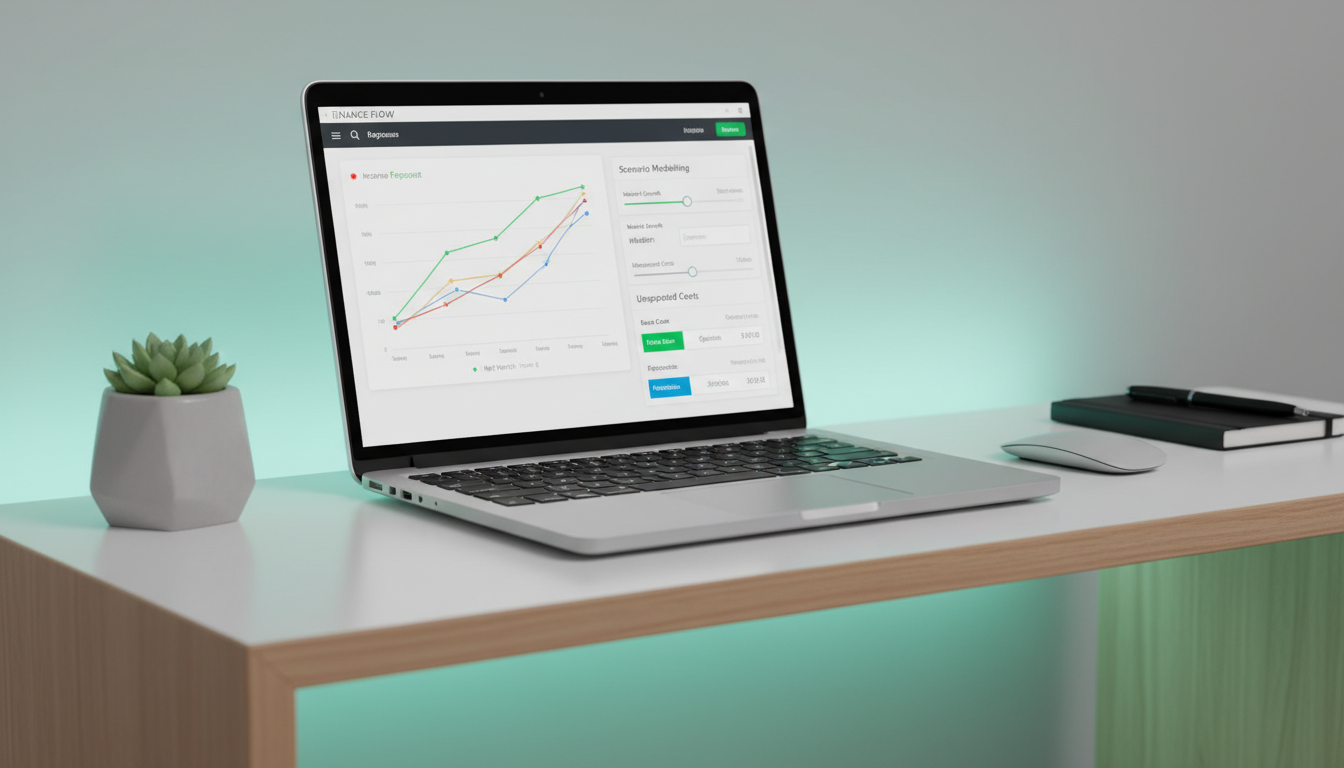
For most UK SMEs, budgeting and forecasting happen in spreadsheets. It is understandable — spreadsheets are flexible, familiar, and free. But spreadsheet-based financial planning has fundamental limitations that become increasingly costly as a business grows: version control breaks down as multiple people edit different copies, scenarios are difficult to manage cleanly, actual-versus-budget variance reporting requires manual data extraction from the accounting system, and rolling forecasts are laborious to maintain. Dedicated budgeting and forecasting software solves all of these problems, and a fractional Finance Director can select, implement, and embed the right tool for your business.
The market for budgeting and forecasting software has matured considerably in recent years, and there are now excellent options at every price point from small SME through to listed company. The challenge is not finding a tool — it is finding the right tool for your specific business model and financial planning maturity, then implementing it in a way that actually gets used.
When Is the Right Time to Invest in Forecasting Software?
Not every business needs dedicated forecasting software. For businesses at the earlier stages of their journey, a well-constructed Excel or Google Sheets model built and maintained by a fractional FD may be entirely sufficient. The investment case for dedicated software typically becomes compelling when one or more of the following conditions apply:
- The business has multiple departments or cost centres, each of which needs to contribute to the budget process
- Management accounts are taking more than 10 working days to produce because of manual data manipulation
- The business runs multiple scenarios regularly — best case, base case, downside — and maintaining these in spreadsheets is consuming significant time
- Investors, lenders, or a board require monthly variance reporting in a consistent, professional format
- Rolling 12-month cash flow forecasting is being updated manually each month rather than driven by model logic
- The finance team is spending more time maintaining spreadsheet models than interpreting the outputs
Leading Budgeting and Forecasting Tools for UK SMEs
The landscape of budgeting and forecasting software available to UK SMEs ranges from tools designed specifically for small businesses through to sophisticated corporate performance management platforms. A fractional FD evaluates options based on your specific requirements, integration needs, and budget.
Float and Futrli
Float and Futrli (now part of the Sage ecosystem) are purpose-built cash flow forecasting tools designed for SMEs running Xero, QuickBooks, or Sage. They connect directly to your accounting platform, pulling actual transactions in real time and projecting forward based on historical patterns and manually entered future commitments. Both tools are particularly well-suited to businesses that need reliable 13-week cash flow visibility — a critical requirement for any business managing working capital actively or servicing debt facilities. The learning curve is minimal, the setup time is measured in hours rather than days, and the output quality is significantly better than a manually maintained spreadsheet model.
Fathom and Spotlight Reporting
Fathom and Spotlight Reporting sit at the management reporting and KPI tracking end of the spectrum, pulling data from accounting platforms to produce visually compelling board packs, actual-versus-budget variance reports, and multi-period trend analysis. These tools are particularly valuable for businesses that need to produce professional management reports for investors or boards on a monthly basis without consuming significant finance team time in the production process. A fractional FD configures the report templates to match the specific KPIs and reporting structure the business needs, then the tool produces updated reports automatically each month as new actual data arrives from the accounting platform.
Jirav, Mosaic, and Cube
For businesses that need more sophisticated driver-based financial modelling — where the financial forecast is built from operational assumptions such as headcount, utilisation rates, average deal values, and customer churn — platforms such as Jirav, Mosaic, and Cube provide significantly more flexibility than simpler cash flow tools. These platforms support collaborative budgeting processes where department heads can contribute to their sections of the budget directly, multi-scenario management, and sophisticated integration with CRM and HR systems as well as accounting platforms. They represent a more significant investment, both financially and in implementation effort, but for businesses with genuine planning complexity they deliver corresponding value.
The FD's Role in Implementation
Selecting the right tool is necessary but not sufficient. Budgeting and forecasting software consistently underdelivers when it is implemented without adequate attention to the underlying model design. The software is only as good as the assumptions and structures embedded within it. A fractional FD takes responsibility for the model design as well as the technology configuration, ensuring that the forecasting logic reflects how the business actually works — its revenue drivers, its cost structure, its cash conversion cycle — rather than being a generic template that produces superficially impressive outputs from fundamentally flawed assumptions.
"We had bought Jirav a year before our FD joined us. It was barely being used. Within two months they had it running properly and it became the centrepiece of our monthly board meeting."
The FD also plays a critical role in embedding the tool in the organisation's culture and rhythm. Forecasting software only delivers value when it is actually used — when the monthly forecast update is a discipline rather than an afterthought, when variance analysis drives genuine management conversations, and when scenario modelling informs real decisions rather than sitting untouched between board meetings. Creating this culture of financial discipline is as important as the technology implementation itself.
Integrating Forecasting with Operational Planning
The most sophisticated application of budgeting and forecasting software connects financial planning directly to operational planning — headcount plans, capacity plans, sales pipeline data, and project schedules all feed into the financial model automatically, creating a genuinely integrated business plan rather than a financial model that is maintained separately from operational reality. A fractional FD designs the integration architecture that makes this connection possible, working with operational systems to identify the data flows that can drive financial model inputs automatically.
To understand how this connects with the broader systems landscape, see our article on integrating finance data with CRM and operational systems. For businesses at an earlier stage of the journey who are primarily looking to move off spreadsheets, our guide on moving from spreadsheets to a proper finance system provides the wider context.