Articles › Systems & Processes
Systems & ProcessesConsolidating Accounts Across Multiple Entities
Learn how a fractional Finance Director consolidates accounts across multiple legal entities — producing group-level reporting that gives directors a true picture of overall performance.
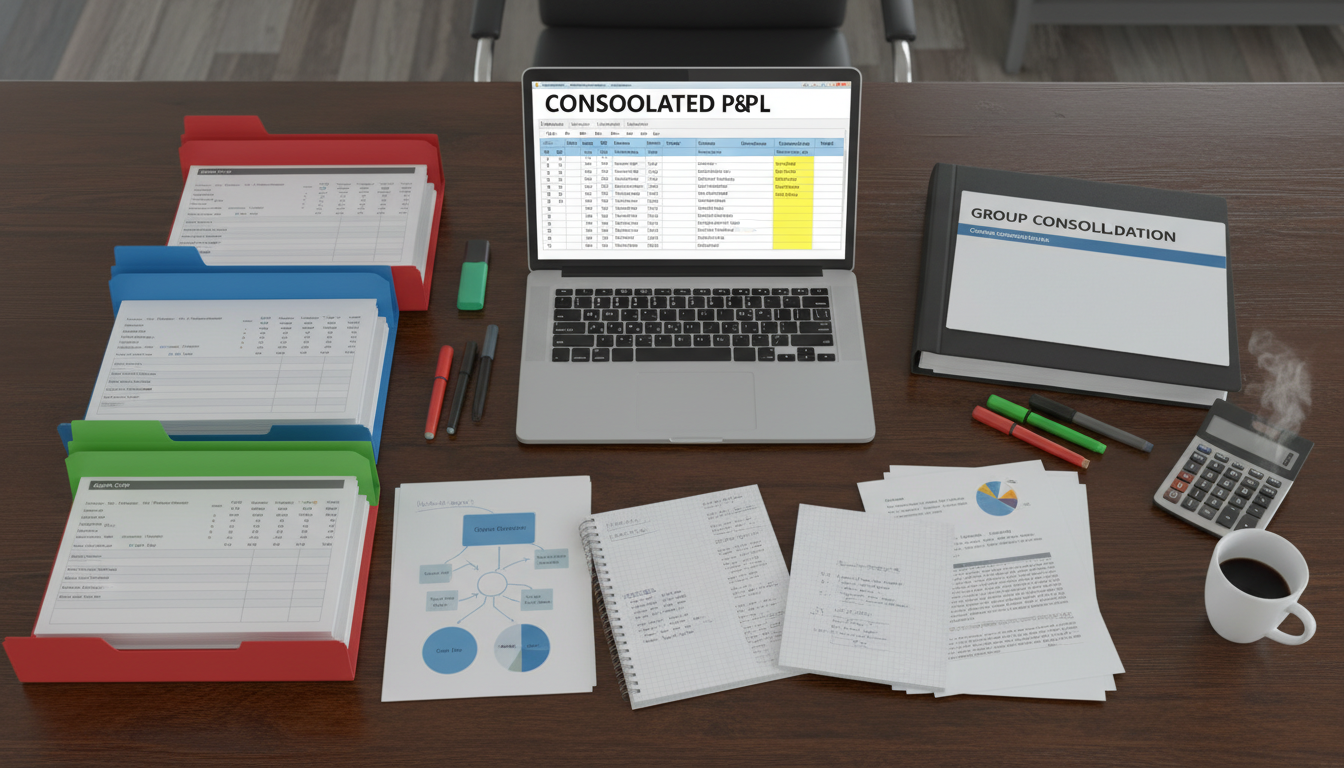
Many growing businesses operate across more than one legal entity. A holding company with two or three trading subsidiaries. A property company sitting alongside an operating business. A joint venture entity. An overseas subsidiary. Each entity has its own set of accounts — but directors need to understand the financial position of the group as a whole, not just the individual parts.
Consolidating accounts across multiple entities is a technically demanding but entirely achievable task for a fractional Finance Director. The result is group-level management accounts that give directors a true and complete picture of group performance — with intercompany transactions properly eliminated and the overall financial position clearly presented.
Why Consolidation Is More Than Adding Numbers Together
The most common misconception about group consolidation is that it simply involves adding up the accounts of each entity. In reality, consolidation requires several adjustments that, if missed, will produce a materially misleading group picture.
The most significant issue is intercompany transactions. When one entity within a group charges another — for management fees, rent, services, or loans — those transactions appear as income in one entity and a cost in another. If you simply add the two entities together without eliminating these transactions, you are double-counting. The group profit and loss and balance sheet must be adjusted to remove all intercompany trading so that only genuine third-party activity is reflected.
Key Consolidation Adjustments
- Intercompany revenue and cost elimination: removing sales and purchases between group companies
- Intercompany loan elimination: removing debts and receivables that exist between entities within the group
- Investment elimination: removing the parent company's investment in subsidiaries against the subsidiaries' equity
- Minority interest: where the parent does not own 100% of a subsidiary, the minority share is presented separately
- Consistent accounting policies: ensuring all entities apply the same accounting treatments before consolidation
When Do You Need Consolidated Accounts?
Statutory group consolidation under UK GAAP (FRS 102) is legally required once a group exceeds certain size thresholds — broadly, two of the following three: more than 50 employees, turnover above £10.2m, gross assets above £5.1m. Below those thresholds, a statutory consolidation is not required. But management consolidation — producing consolidated accounts for internal decision-making purposes — is valuable for any group, regardless of size.
If your directors are trying to understand whether the group as a whole is profitable and cash-generative, they need consolidated management accounts. Looking at each entity in isolation tells an incomplete and sometimes misleading story.
"A group can have one entity showing a healthy profit whilst another quietly accumulates losses. Without consolidated reporting, directors may not see the full picture until it is too late."
How a Fractional FD Approaches Group Consolidation
The first step is to map the group structure — understanding which entities exist, how they are legally connected, and what intercompany transactions occur between them. This is often a more complex picture than directors realise, particularly where entities have evolved organically over time.
Setting Up the Consolidation Process
A fractional FD will ensure that all entities have a consistent chart of accounts — the same categories for revenue, costs, and balance sheet items. This alignment is essential for consolidation to work cleanly. Where entities use different accounting systems, a consolidation model is built — typically in Excel or a dedicated consolidation tool — that pulls in the trial balance from each entity, applies the necessary adjustments, and produces the group accounts.
For groups where the volume and complexity of intercompany transactions is significant, dedicated consolidation software such as Sage Intacct, Xero HQ, or Fathom can automate much of the process and reduce the risk of error.
Reporting at Both Group and Entity Level
Consolidated group accounts are one output. Alongside them, directors will typically also need to see the individual entity accounts — because tax, banking covenants, and dividend decisions are made at entity level rather than group level. A good reporting framework provides both: group consolidated accounts for strategic oversight, and entity-level monthly management accounts for operational management.
For groups with distinct business units or divisions, the consolidation framework can also be extended to produce departmental P&L reporting that cuts across entity boundaries — showing the financial performance of a business function regardless of which legal entity its costs and revenues sit in.
Preparing for External Requirements
Group consolidation is also important preparation for external requirements. Lenders and investors will want to see group-level financials. If the business is ever sold or raises external equity, the due diligence process will require clean, consolidated historical accounts. Building a robust consolidation process now means that when those requirements arise, the information is already available and reliable.