Articles › Getting Started
Getting StartedFixed vs Variable FD Pricing: Which Is Right for You?
Fixed FD pricing offers budget certainty while variable pricing flexes with hours worked. Compare both models to find the right structure for your business needs.
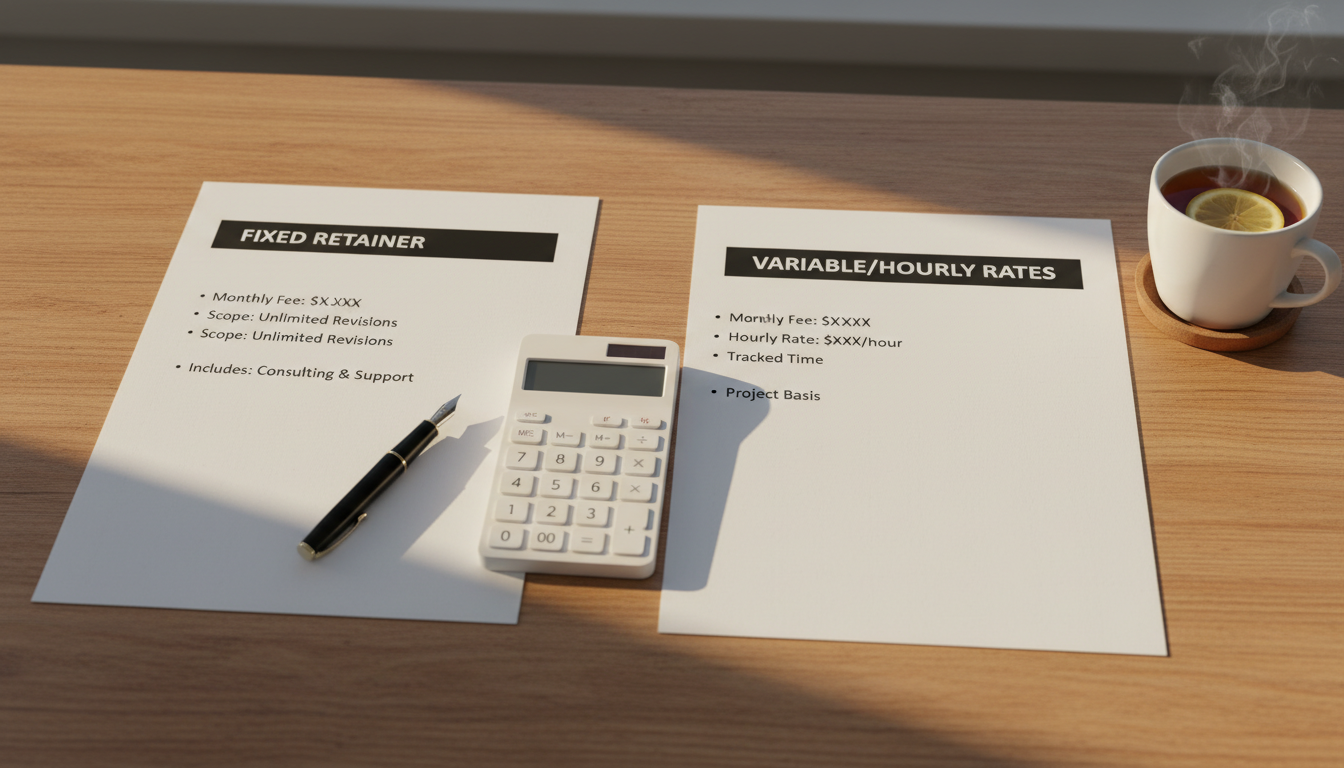
Fixed price FD pricing provides budget certainty in exchange for accepting that some months the FD works slightly more or less than the exact hours committed. Variable pricing, billed against actual hours worked, ensures you pay precisely for what you get but introduces invoice uncertainty. Understanding the trade-offs between these two approaches enables you to choose a structure that matches your business's financial management style and risk appetite.
Defining Fixed and Variable Pricing in Fractional FD Engagements
In the context of fractional FD services, the distinction between fixed and variable pricing is as follows:
Fixed price means the monthly invoice is the same regardless of whether the FD works slightly more or fewer hours than the nominal day commitment. A fixed retainer of £2,500 per month covering two days is paid at £2,500 whether the FD works 14 or 17 hours in a given month, with both parties accepting that hours will balance over the contract period.
Variable pricing means the monthly invoice reflects the actual time recorded by the FD, typically in half-day or hour increments, multiplied by the agreed rate. If the FD records 2.5 days at £900 per day, the invoice is £2,250. If they record 3 days, the invoice is £2,700.
The Case for Fixed Price Retainers
Fixed price retainers are the most common structure for fractional FD engagements in the UK, and for good reason. The fixed price model delivers several practical advantages:
Advantages of fixed pricing
- Predictable monthly cost — straightforward to budget
- No time-tracking friction — the FD focuses on outcomes, not hours
- Encourages a strategic, output-focused relationship
- Simpler invoicing and accounts payable process
- No incentive for the FD to over-record time
Disadvantages of fixed pricing
- You pay the same even in quieter months with lower usage
- Scope creep risk if day allocation is not clearly defined
- Requires clear agreement upfront on what the retainer covers
- Additional days above the retainer still need to be tracked and invoiced separately
Why outcomes matter more than hours
A fractional Finance Director's value is almost entirely expressed through outcomes: the quality of the board pack, the rigour of the cash flow forecast, the soundness of the strategic advice, the credibility they bring to investor conversations. None of these are well measured by hours. An experienced FD who identifies a £50,000 cost saving in a two-hour review session delivers more value than a less experienced individual who takes two days to reach the same conclusion. Fixed pricing aligns with outcome-based thinking; hourly billing incentivises time-on-task rather than results.
The Case for Variable Pricing
Variable pricing has legitimate use cases, particularly for businesses with genuinely unpredictable FD demand or those undertaking a defined project where scope uncertainty exists.
Advantages of variable pricing
- You pay only for time actually worked — no waste in quiet months
- Natural flexibility for engagements with genuine demand variability
- Transparent audit trail of FD activity through timesheets
- Appropriate for project-based work where scope evolves
Disadvantages of variable pricing
- Invoice unpredictability — difficult to budget precisely
- Creates time-tracking overhead for both parties
- Subtle incentive for the FD to spend more time to generate more income
- Can create a transactional dynamic that undermines strategic partnership
- Potential for timesheet disputes
Hybrid Structures: Getting the Best of Both
The most commercially sophisticated fractional FD arrangements combine a fixed retainer baseline with a variable element for activity above the retainer. This hybrid structure captures the benefits of both models:
- A fixed monthly retainer of, say, two days provides budget certainty for the steady-state engagement
- Additional days above the retainer are billed at a pre-agreed day rate, invoiced monthly based on actual usage
- The fixed retainer rate is typically slightly lower than the variable day rate, rewarding the business for the committed baseline
This structure means your baseline finance leadership cost is predictable and budgeted, while peak activity months — a fundraise, an acquisition, a budget cycle — are costed accurately against actual usage.
"The fixed retainer covers the rhythm of the business. The variable element covers the moments that matter most. Smart businesses build their FD budget around both."
What FractionalFD Recommends
FractionalFD recommends fixed monthly retainers as the default structure for all ongoing strategic engagements, supplemented by a clearly agreed variable day rate for activity above the retainer. This approach provides:
- Cost predictability for your finance team and board
- A natural incentive for both parties to maximise value within the committed days
- A clear, pre-agreed mechanism for managing peak demand without renegotiating from scratch
- An output-focused dynamic that draws the best performance from the FD
For project-specific engagements — a fundraise, a systems implementation, a business sale process — a fixed project fee with a clearly defined scope and a cap on total hours is typically the most appropriate structure. For guidance on the different pricing models available, see our guide on how fractional FDs charge — by the day, retainer, or project.
Key Questions to Ask Before You Sign
Before committing to any pricing structure for a fractional FD engagement, clarify the following:
- Is the quoted fee fixed or variable? If variable, what is the unit of measurement (hours, half-days, full days)?
- What happens to unused days in a fixed retainer — do they roll forward or lapse?
- What is the agreed rate for additional days above the retainer?
- Is the quoted fee exclusive or inclusive of VAT?
- How is scope creep identified and managed?
For a complete picture of what you should expect in a retainer agreement, read our guide on what is included in a monthly FD retainer fee. For guidance on costs beyond the headline fee, see our article on hidden costs and additional fees to watch for.