Articles › Growth & Strategy
Growth & StrategyCan You Advise on Whether to Lease or Buy Assets?
A fractional Finance Director analyses the lease vs buy decision for UK SMEs — weighing the cash flow, tax, balance sheet, and operational implications to recommend the right approach.
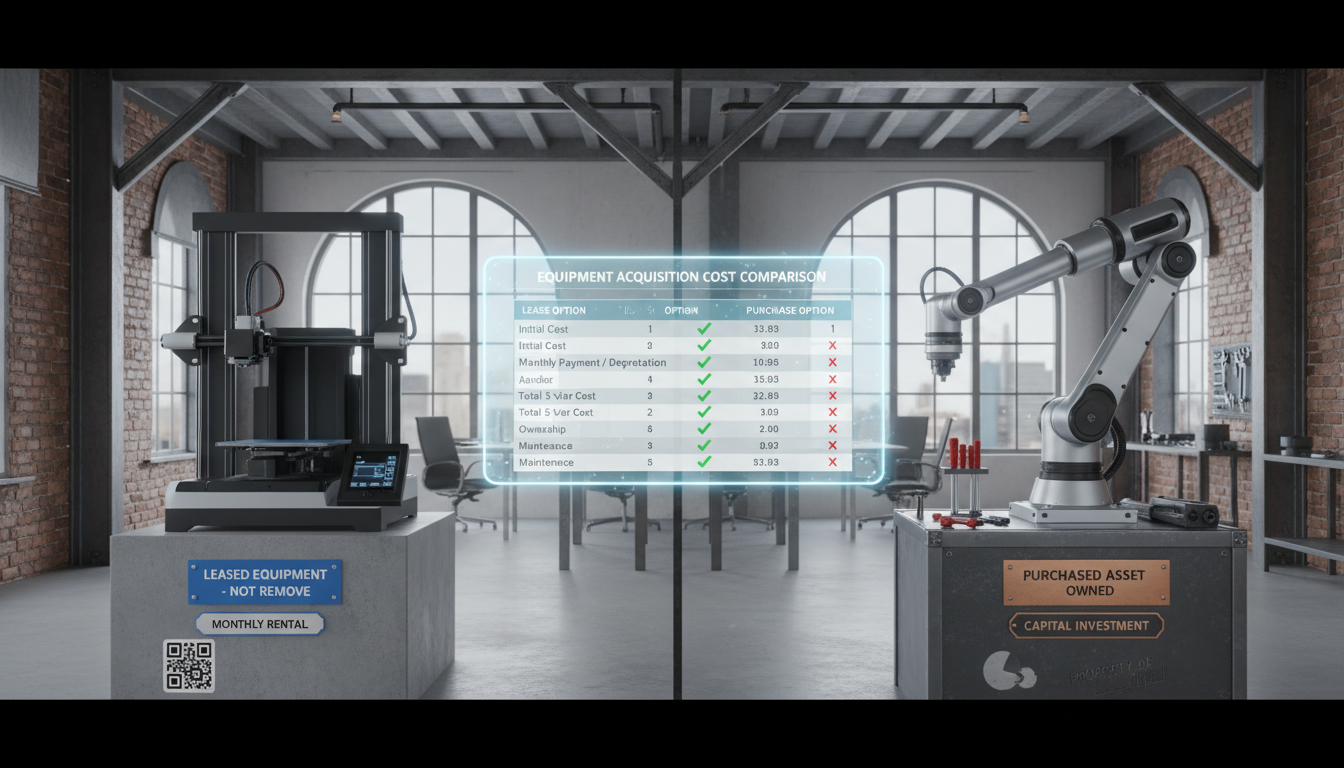
The decision to lease or buy assets is a common financial question in UK SMEs — and it is rarely as straightforward as it appears. A fractional Finance Director brings the financial analysis, tax knowledge, and strategic perspective to make this decision with confidence rather than relying on the sales pitch of the asset provider.
Why the Lease vs Buy Decision Matters
Whether the asset in question is a fleet of vehicles, manufacturing equipment, IT infrastructure, or commercial premises, the lease vs buy decision affects your cash flow, balance sheet, tax position, and operational flexibility in ways that compound over the life of the asset. Making the wrong choice does not just cost money in the short term — it can constrain the business's ability to invest elsewhere or adapt to changing circumstances.
A fractional FD evaluates the lease vs buy question using a structured financial framework that considers all of these dimensions, not just the monthly payment.
The Financial Analysis Framework
Total Cost of Ownership
The most important starting point in any lease vs buy analysis is the total cost of ownership (TCO) over the useful life of the asset. For outright purchase, this includes the acquisition cost, financing costs if the purchase is funded by debt, maintenance and insurance costs, and the residual value at the end of the asset's useful life. For leasing, it is the total of all lease payments over the term, plus any maintenance obligations and end-of-lease costs.
Comparing these figures on a like-for-like basis — using net present value (NPV) analysis to account for the time value of money — reveals which option is genuinely cheaper over the relevant time horizon. A fractional FD performs this NPV analysis as the quantitative foundation of the recommendation.
Cash Flow and Capital Preservation
Even if purchasing an asset has a lower total cost over its life, the immediate capital outlay may be a significant constraint on the business. A growing business with a full investment pipeline may prefer the predictable, lower monthly payments of a lease over the large upfront cash commitment of purchase — particularly where the capital could be deployed elsewhere at a higher rate of return.
A fractional FD models the cash flow implications of each option within the context of the wider business financial plan. The question is not just which option is cheaper in isolation — it is which option leaves the business in the strongest financial position given all of its competing priorities for capital.
Tax Treatment
The tax treatment of leasing versus purchasing differs significantly and can materially affect the financial outcome. Key considerations for UK businesses include:
- Capital allowances on purchase: Owned assets may qualify for the Annual Investment Allowance (AIA), enabling the full cost to be deducted against taxable profit in the year of purchase — providing valuable tax relief upfront.
- Operating lease payments: Payments on operating leases are typically fully deductible as a business expense in the period they are incurred.
- Finance lease accounting: Under IFRS 16 and FRS 102, most leases are recognised on the balance sheet, which affects gearing ratios and may have implications for covenant compliance.
- VAT recovery: The VAT treatment of lease payments versus asset purchases varies depending on the asset type and the lease structure — particularly for company cars and mixed-use assets.
A fractional FD works with your tax advisers to ensure the analysis reflects the actual after-tax cost of each option.
"The lease vs buy decision is not answered by comparing monthly payments. It requires a full NPV analysis, a clear view of the business's capital priorities, and an understanding of the tax and balance sheet implications of each structure."
Balance Sheet and Covenant Considerations
For businesses with bank debt or investor funding, the balance sheet treatment of leased assets may affect financial covenants. Under current UK accounting standards, finance leases create right-of-use assets and corresponding lease liabilities on the balance sheet, which increases gross debt and gearing ratios. If your bank covenants include a maximum gearing ratio or net debt to EBITDA limit, a significant new lease commitment could breach those covenants — a consequence that a fractional FD will identify and address before the decision is made.
Operational Flexibility and Technology Risk
Beyond the numbers, the lease vs buy decision must factor in the operational characteristics of the asset. For assets that are subject to rapid technological change — such as IT hardware, software platforms, or specialist equipment — leasing preserves flexibility: the business can upgrade at the end of the lease term without the capital constraint or disposal cost of owned assets. For assets that are expected to remain operationally relevant over a long period — land, buildings, and certain types of plant — purchase may provide better long-term value and security of tenure.
Making the Recommendation
After completing the financial analysis, a fractional FD presents a clear recommendation to the board or leadership team — with the supporting numbers, the key assumptions, and an honest view of the risks and sensitivities associated with the preferred option. The recommendation is always made in the context of the business's wider financial strategy, not in isolation.
This structured, evidence-based approach to the lease vs buy decision is the difference between a choice made on financial understanding and one made on instinct or the persuasion of the asset provider's sales team.