Articles › Fundraising & Investment
Fundraising & InvestmentDebt vs Equity Finance: Which Is Right for Your Business?
A fractional Finance Director can advise on the best type of finance for your business — debt vs equity. Understand the key differences, costs, and when each option makes sense for UK SMEs.
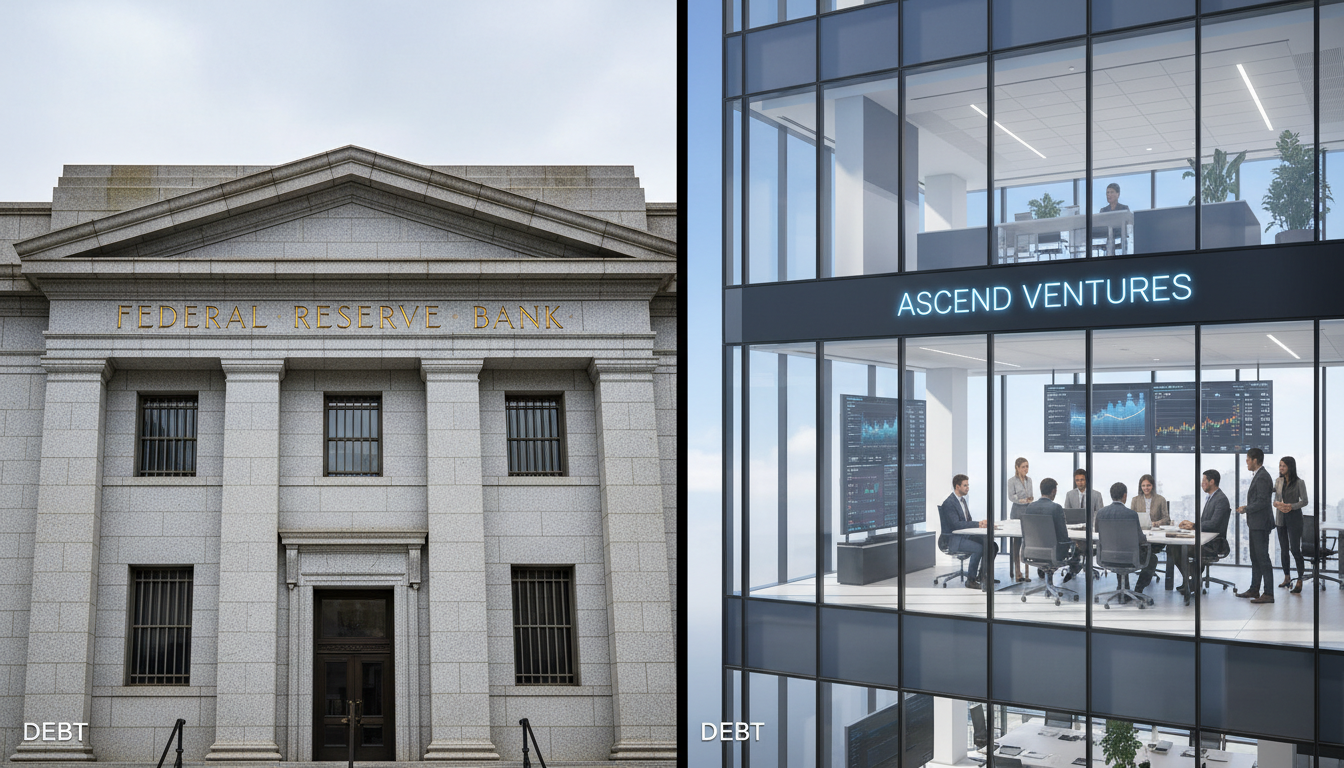
The choice between debt finance and equity investment is one of the most consequential funding decisions a growing UK business makes. Get it right and you have capital structured to support your ambitions without unnecessary cost or control concessions. Get it wrong and you may find yourself servicing debt the business cannot afford, or giving away equity at a valuation that proves far too low in hindsight. A fractional Finance Director brings the analytical framework and practical experience to advise on this decision objectively — and to model the financial implications of each route in the context of your specific business.
This article sets out the fundamental differences between debt and equity finance, the factors that should drive the decision, and how a fractional FD helps you navigate the choice.
The Fundamental Difference Between Debt and Equity
Debt finance is borrowed money. You receive capital, pay interest on it, and repay the principal over an agreed period. Your ownership of the business is unchanged. However, you take on a legal obligation to make regular payments regardless of trading performance, and the lender typically takes security over business or personal assets.
Equity finance is the sale of a share in the business. You receive capital in exchange for giving an investor a percentage ownership stake. There is no obligation to repay the capital or pay interest, but the investor shares in the future profits and sale proceeds of the business. The implicit cost of equity — in terms of the future value you surrender — is often considerably higher than the explicit cost of debt, even though equity feels cheaper in the short term because there are no monthly repayments.
When Debt Finance Is Usually the Right Choice
Debt finance is generally the appropriate choice when the following conditions apply:
- The business generates consistent, predictable cash flow sufficient to service the debt comfortably even under downside scenarios
- The purpose of the borrowing is clearly defined — capital expenditure, an acquisition, or working capital — with a credible repayment mechanism
- The business has assets, debtors, or cash flow that can serve as security or support an asset-based lending facility
- The founders wish to retain full ownership and control of the business
- The growth capital requirement is modest relative to the business's existing earnings capacity
Debt finance is cheaper than equity in terms of the total return demanded by the provider. Interest rates — even at today's levels — represent a lower implied return than the 20-30% internal rate of return typically sought by equity investors. For a profitable, cash-generative business, using debt to fund growth preserves all the future upside for the existing shareholders.
Types of Debt Finance for UK SMEs
The UK market offers a wide range of debt instruments. The right product depends on the purpose of the finance, the business's asset base, and the nature of its cash flows. Term loans, revolving credit facilities, invoice finance, asset finance, and government-backed lending schemes all have different structures and cost profiles. Our article on raising debt finance sets out these options in detail.
When Equity Investment Is Usually the Right Choice
Equity investment makes sense when conditions are materially different:
- The business is pre-profitability or in an early growth phase where cash flow is insufficient to service debt obligations
- The growth plan requires investment in advance of revenue — building technology, expanding a team, or entering new markets — with a long payback period
- The scale of the capital requirement is too large to be supported by affordable debt given the business's current earnings
- The investor brings strategic value beyond capital — sector expertise, commercial relationships, or operational experience that accelerates the business's development
- The founders are willing to accept dilution and institutional oversight in exchange for accelerated growth ambitions
Equity is not free — it is the most expensive form of capital when viewed over a full business lifecycle. A business that sells 30% for £1 million today and then sells for £20 million in five years has given away £6 million in value for what felt like a £1 million investment. A fractional Finance Director helps founders understand this arithmetic clearly before they commit.
"Our FD modelled both routes — debt and equity — over a ten-year horizon. The equity route accelerated our growth, but the total economic cost of dilution was three times what the debt route would have cost. We chose debt. It was the right decision for our specific business."
The Role of the Fractional FD in the Debt vs Equity Decision
A fractional Finance Director approaches this decision analytically rather than instinctively. The process typically involves:
- Modelling the business's free cash flow under the growth plan to assess debt serviceability
- Assessing the availability and likely terms of debt finance given the business's current financial profile
- Modelling the equity dilution required to fund the growth plan and the implied long-term cost
- Stress-testing both scenarios — what happens under the debt route if growth underperforms? What happens under the equity route if the business outperforms?
- Considering hybrid structures — combining modest debt with a smaller equity raise, or using government-backed lending as an alternative to pure commercial debt
This analysis produces a clear recommendation grounded in your specific financial position rather than generic advice about what growing businesses typically do.
Hybrid Structures and the Capital Stack
The debt vs equity choice is not always binary. Many UK SMEs use a combination of funding sources that sit at different points in the capital structure. Mezzanine debt — subordinated lending that sits between senior bank debt and equity — allows businesses to access more capital than senior debt alone whilst limiting dilution. Venture debt, available to venture-backed businesses, provides loan capital alongside an equity round, reducing the amount raised from investors. Government-backed grant funding, where available, can reduce the overall capital requirement and improve the economics of both debt and equity routes.
Designing an optimal capital structure across multiple instruments requires financial expertise that most business owners do not have internally. This is precisely where a fractional Finance Director earns their fee — not just advising on the binary debt vs equity question, but designing the most efficient overall funding structure for your growth objectives. For businesses considering equity, our article on preparing for equity investment explains what the full process involves.